
Insurance Defense Reporting and Analytics: Essential KPIs, Dashboards, and Legal Business Intelligence for Law Firms
Insurance defense law firms operate in one of the most data-intensive areas of legal practice. Every matter involves carrier guidelines, litigation budgets, billable hours, deadlines, invoices, reporting requirements, and compliance obligations that must be managed efficiently while maintaining profitability.
Yet many firms still rely on spreadsheets, disconnected reporting tools, and manual processes to track performance. As matter volumes grow and insurance carriers demand greater transparency, firms need real-time visibility into operational, financial, and matter-level performance.
Effective insurance defense reporting and analytics help firms improve profitability, strengthen carrier relationships, optimize attorney workloads, monitor litigation budgets, and make data-driven decisions.
Written by Knowledge Team, posted on October 02, 2026

Why Insurance Defense Reporting Matters
Unlike many other practice areas, insurance defense firms are frequently evaluated by carriers based on cost management, billing compliance, reporting responsiveness, and matter outcomes.
Firm leadership must be able to answer questions such as:
- Which matters are exceeding approved litigation budgets?
- Which insurance carriers generate the highest realization rates?
- Which attorneys have the largest workloads?
- Why are invoices being reduced or rejected?
- Which matters require immediate attention?
- Which clients and carriers are most profitable?
- How long does it take the firm to bill and collect revenue?
Modern insurance defense practice management software provides reporting and analytics that help firms answer these questions quickly and accurately.

Insurance Defense Law Firm KPIs Every Firm Should Monitor
Successful insurance defense firms rely on key performance indicators (KPIs) to measure profitability, productivity, compliance, and client service.
The most important insurance defense metrics include:
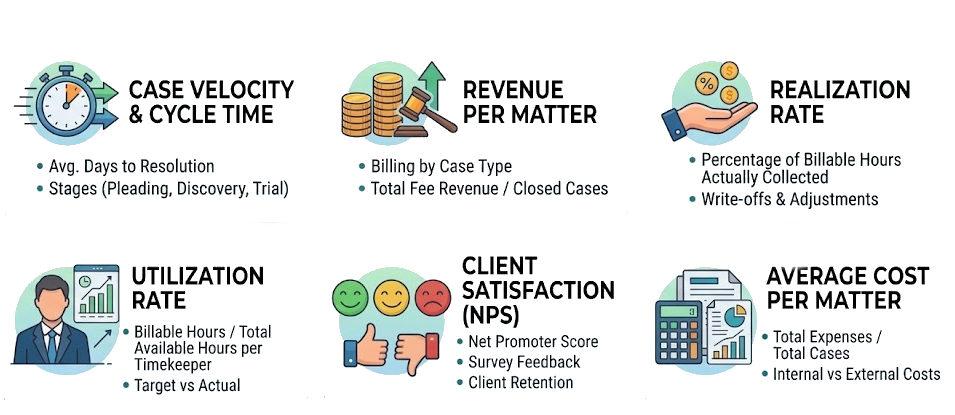
Utilization Rate
Utilization rate measures the percentage of an attorney’s available time spent on billable work.
Monitoring utilization helps firms evaluate productivity, identify capacity issues, and balance workloads across attorneys and staff.
Realization Rate
Realization rate measures the percentage of worked time that is ultimately billed and collected. Insurance defense firms closely monitor realization because carrier billing guidelines, invoice reductions, and write-downs can significantly impact profitability.
Collection Rate
Collection rate measures the percentage of billed revenue that is successfully collected. Tracking collection rates helps firms identify payment delays, billing disputes, and accounts receivable challenges.
Effective Hourly Rate
Effective hourly rate measures actual revenue earned per hour worked after accounting for write-downs, write-offs, and carrier billing adjustments.
This metric often provides a more accurate measure of profitability than standard billing rates.

Average Days to Bill
Average days to bill measures the time between work completion and invoice generation.
Reducing billing delays can improve cash flow and accelerate collections.
Average Days to Collect
Average days to collect measures how long it takes to receive payment after an invoice has been submitted.
Many insurance defense firms analyze this metric by carrier to identify collection bottlenecks and payment trends.

Matter Profitability
Matter profitability compares revenue generated against the cost of servicing a matter.
Profitability analysis helps firms understand which matter types, carriers, and clients generate the strongest financial returns.
Budget Variance
Budget variance measures the difference between approved litigation budgets and actual fees and expenses incurred.
This KPI is particularly important because many insurance carriers require firms to operate within approved budgets.
Carrier App roval Rate
Carrier approval rate measures the percentage of submitted invoices approved without reductions or rejections.
Low approval rates may indicate billing guideline violations, coding issues, documentation gaps, or budget overruns.

Work-in-Progress (WIP) Reporting
Work-in-progress reporting provides visibility into unbilled legal work throughout the firm.
WIP reports typically show:
- Unbilled time entries
- Outstanding expenses
- WIP by attorney
- WIP by matter
- WIP by client
- WIP by insurance carrier
WIP reporting helps firms accelerate billing cycles and identify matters where significant work has accumulated but invoices have not yet been generated.

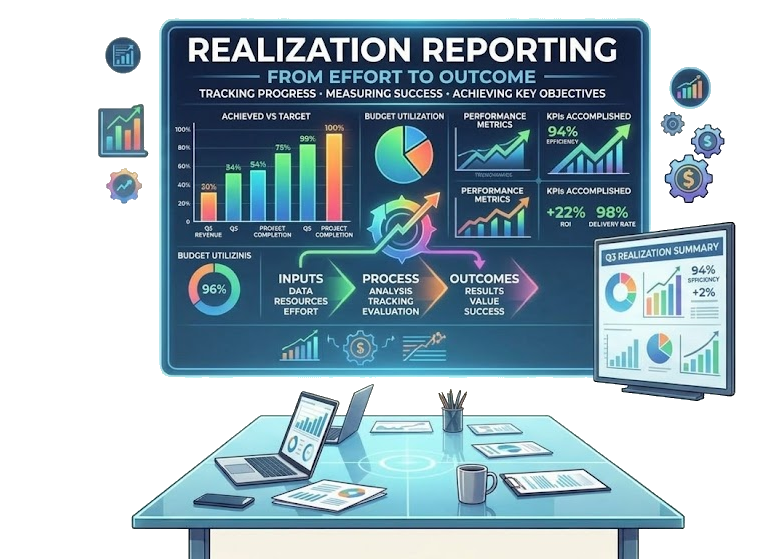
Realization Reporting
Realization reporting helps firms understand revenue leakage throughout the billing lifecycle.
These reports compare:
- Hours worked
- Hours billed
- Revenue billed
- Revenue collected
By analyzing realization rates by attorney, carrier, client, and matter, firms can identify opportunities to improve profitability and billing compliance.
Write-Down and Write-Off Analysis
Insurance carriers frequently apply billing guidelines that can result in invoice reductions.
Write-down and write-off reporting helps firms analyze:
- Pre-bill adjustments
- Carrier reductions
- Billing write-downs
- Write-offs
- Non-billable time
- Rejected time entries
These insights can help firms improve billing accuracy and reduce revenue loss.

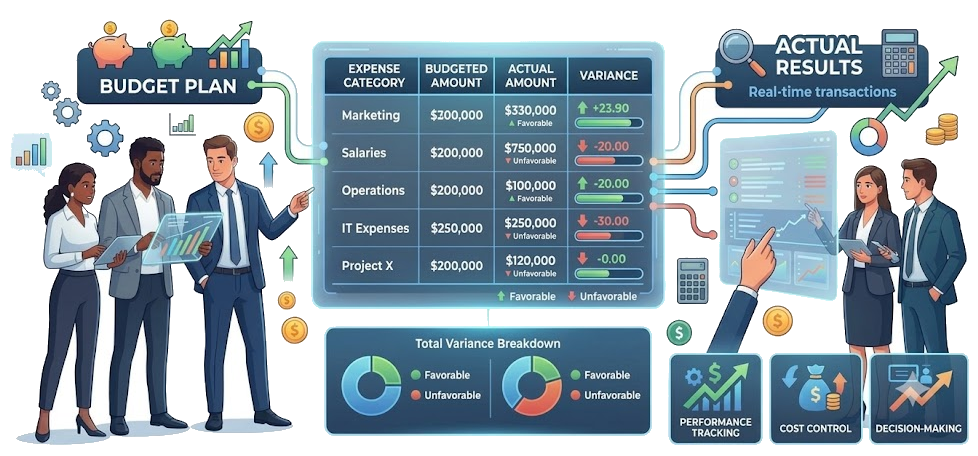
Budget-to-Actual Reporting
Many insurance defense matters operate under approved litigation budgets.
Budget-to-actual reporting allows firms to compare:
- Approved budgets
- Actual fees incurred
- Actual expenses incurred
- Remaining budget allocations
- Budget variance percentages
This visibility helps attorneys proactively manage matters before costs exceed approved thresholds.
Attorney Workload Reporting
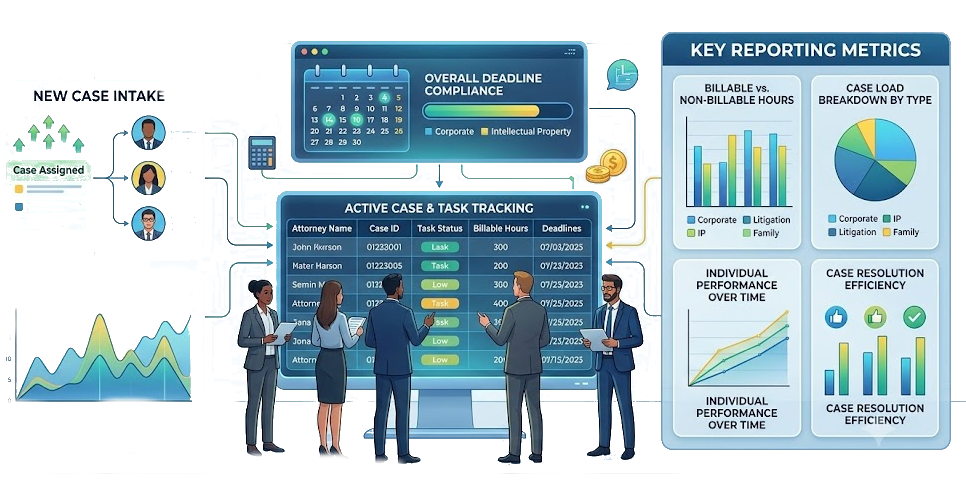
Balanced workloads are critical to both productivity and client service.
Workload reports can provide visibility into:
- Active matters by attorney
- Billable hours
- Open tasks
- Upcoming deadlines
- Resource utilization
- Matter assignments
Reporting is most effective when combined with structured insurance defense workflows that standardize matter intake, task management, carrier compliance, document management, and billing processes. Firms looking to improve operational consistency can review PageLightPrime insurance defense practice management workflow guide.
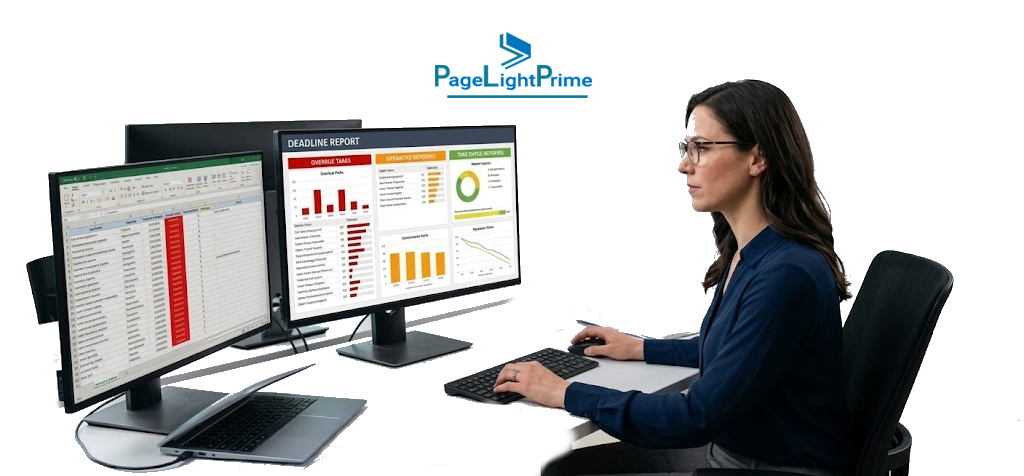
Overdue Tasks and Deadline Reporting
Missing a litigation deadline can create significant risk for both the law firm and the client.
Overdue reporting helps firms identify:
- Missed deadlines
- Upcoming deadlines
- Aging tasks
- Outstanding activities
- Unreviewed documents
- Escalated matters
Proactive reporting supports stronger matter management and risk mitigation.
Matter Status Dashboards
Partners, practice group leaders, and firm administrators often need a high-level view of firm operations.
Matter status dashboards provide visibility into:
- Open matters
- Litigation stages
- Settlement activity
- Trial schedules
- Matter aging
- Case outcomes
- Claim status
Interactive dashboards allow leadership teams to monitor firm performance without manually reviewing individual matter files.
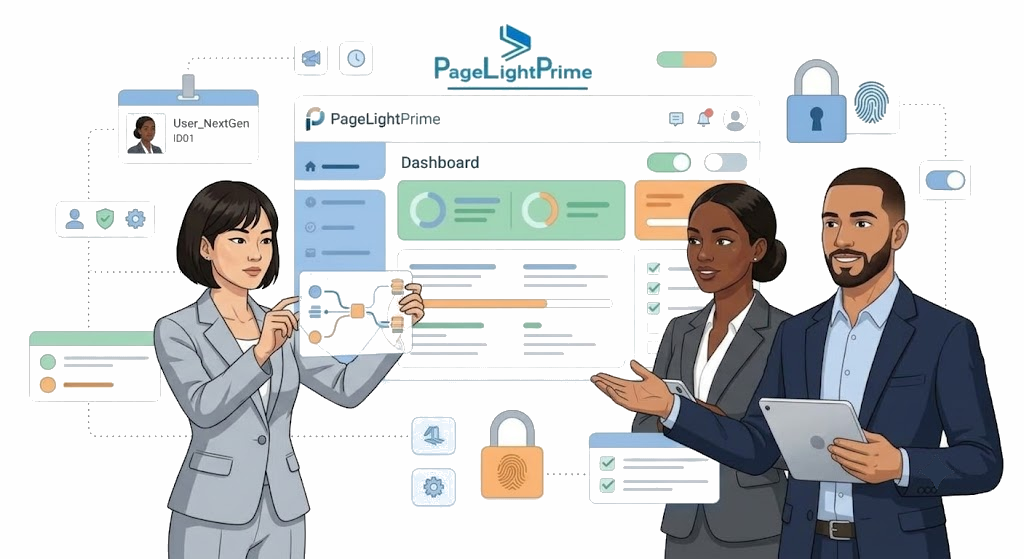
What Should an Insurance Defense Dashboard Include?
An insurance defense dashboard should provide real-time visibility into both operational and financial performance.
Common dashboard metrics include:
- Work-in-progress (WIP)
- Utilization rate
- Realization rate
- Collection rate
- Matter profitability
- Budget variance
- Carrier approval rate
- Attorney workload
- Open matters
- Matter aging
- Litigation budgets
- Invoice approvals and rejections
- Collections performance
- Settlement activity
Insurance defense dashboards help firms identify trends, manage risk, and make informed business decisions.

Billing Rejection Analysis
Invoice rejections can negatively impact both profitability and cash flow.
Billing rejection reports help firms analyze:
- Rejected invoices
- Carrier billing guideline violations
- UTBMS coding issues
- LEDES submission errors
- Budget-related reductions
- Appeal outcomes
Understanding rejection patterns allows firms to improve billing compliance and reduce payment delays.

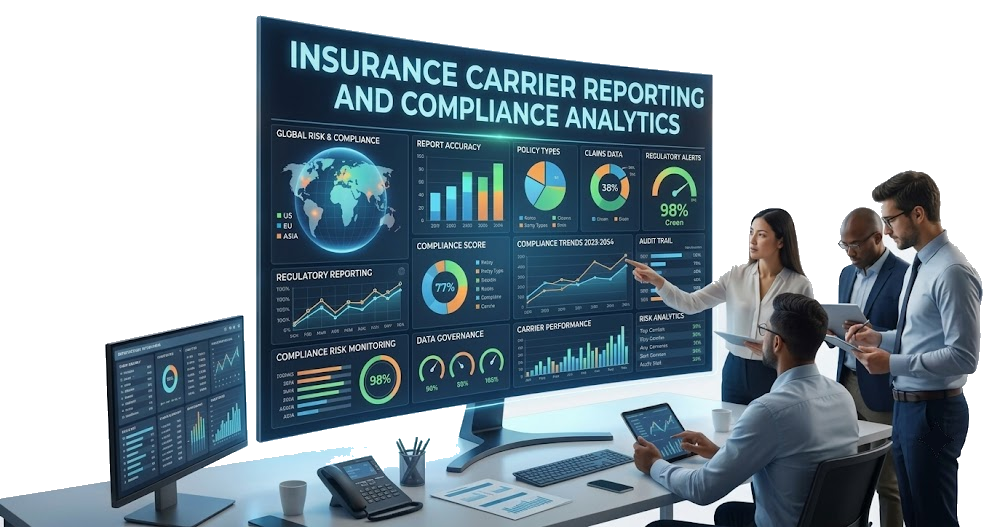
Insurance Carrier Reporting and Compliance Analytics
Insurance carriers increasingly require detailed reporting throughout the lifecycle of a claim.
Insurance carrier reporting tools help firms monitor:
- Billing guideline compliance
- Litigation budget performance
- Invoice approval rates
- Matter status reporting
- Cycle times
- Defense costs
- Outcome reporting
Strong carrier reporting can improve transparency, strengthen carrier relationships, and support outside counsel performance requirements.
Carrier Performance Reporting
Not all insurance carriers behave the same way.
Carrier analytics help firms evaluate:
- Realization rates
- Collection periods
- Approval rates
- Matter profitability
- Average matter duration
- Billing compliance trends
These insights help firms better understand the operational and financial impact of carrier relationships.

Using Litigation Analytics to Improve Insurance Defense Outcomes
Litigation analytics help firms identify patterns across large volumes of matters.
Insurance defense firms can analyze:
- Claim types
- Case duration trends
- Settlement activity
- Defense costs
- Litigation outcomes
- Matter cycle times
- Resource utilization
These insights support better forecasting, staffing decisions, and strategic planning.

Legal Business Intelligence for Insurance Defense Practices
Legal business intelligence combines data from matter management, billing, accounting, document management, and reporting systems to provide actionable insights across the firm.
Rather than relying on spreadsheets and disconnected reports, firms can use legal business intelligence tools to analyze:
- Attorney performance
- Carrier profitability
- Litigation costs
- Budget compliance
- Revenue trends
- Collections performance
- Matter outcomes
The result is better visibility into both day-to-day operations and long-term business performance.

Executive Dashboards for Firm Leadership
Managing partners, practice group leaders, and firm administrators need access to real-time information across the entire firm.
Executive dashboards can consolidate:
- Financial performance
- WIP and realization
- Budget compliance
- Attorney productivity
- Carrier performance
- Matter status
- Collections
- Profitability metrics
Interactive dashboards enable leadership teams to drill into specific matters, clients, carriers, attorneys, offices, and practice groups.

How PageLightPrime Supports Insurance Defense Reporting and Analytics
PageLightPrime insurance defense practice management software provides insurance defense reporting and analytics built directly on Microsoft 365 for law firms..
Insurance defense firms can monitor:
- Work-in-progress (WIP)
- Utilization and realization rates
- Matter profitability
- Litigation budgets
- Budget variance
- Attorney workloads
- Carrier performance
- Invoice approvals and rejections
- Matter status and aging
- Collections and financial performance
Through Microsoft Power BI dashboards and matter-centric reporting, firms gain real-time visibility into operational and financial performance while keeping their documents, emails, and matter data within their own Microsoft 365 environment.
Because PageLightPrime legal accounting software for insurance defense is Microsoft 365-native, firms can leverage legal business intelligence, litigation analytics, and insurance carrier reporting without moving data into a separate vendor-controlled repository.

“
Conclusion
Insurance defense law firms face growing pressure to control costs, comply with carrier requirements, improve realization rates, and deliver timely reporting.
Comprehensive insurance defense reporting and analytics provide the visibility needed to manage litigation budgets, monitor profitability, optimize workloads, improve billing compliance, and strengthen carrier relationships.
By tracking the right KPIs and leveraging modern dashboards, legal business intelligence, and litigation analytics, insurance defense firms can make better decisions, improve financial performance, and gain a competitive advantage in an increasingly data-driven legal environment.
“
Frequently Asked Questions (FAQ)
What KPIs are most important for insurance defense law firms?
Common insurance defense KPIs include utilization rate, realization rate, collection rate, effective hourly rate, average days to bill, average days to collect, matter profitability, budget variance, and carrier approval rates. These metrics help firms measure financial performance, productivity, and billing compliance.
Why is realization rate important in insurance defense?
Realization rate measures the percentage of worked time that is ultimately billed and collected. Because insurance carriers often enforce billing guidelines and apply invoice reductions, realization is a critical indicator of law firm profitability.
How can insurance defense firms reduce invoice rejections?
Firms can reduce invoice rejections by monitoring billing guideline compliance, reviewing UTBMS coding accuracy, validating LEDES submissions, tracking budget adherence, and analyzing rejection trends. Specialized insurance defense billing software can help automate these processes and improve carrier compliance.
What should an insurance defense dashboard include?
An insurance defense dashboard should include WIP, utilization rate, realization rate, collection rate, matter profitability, budget variance, carrier approval rates, attorney workloads, open matters, matter aging, litigation budgets, invoice approvals, collections performance, and settlement activity.
How do insurance defense firms monitor litigation budgets?
Insurance defense firms use budget-to-actual reporting to compare approved budgets, actual fees, actual expenses, remaining budget allocations, and budget variance percentages. This helps attorneys identify matters that may exceed approved carrier budgets.
What is legal business intelligence for insurance defense law firms?
Legal business intelligence combines data from matter management, billing, accounting, document management, and reporting systems to provide insights into attorney performance, carrier profitability, litigation costs, collections, budget compliance, and matter outcomes.
How can insurance defense firms improve attorney workload management?
Attorney workload reporting provides visibility into active matters, billable hours, open tasks, upcoming deadlines, resource utilization, and matter assignments. These insights help firms balance workloads and allocate resources more effectively.
How does insurance defense practice management software improve reporting?
Insurance defense practice management software centralizes matter, billing, accounting, document, and workflow data, enabling firms to generate real-time dashboards and analytics. This improves visibility into profitability, workloads, carrier compliance, litigation budgets, and operational performance.
Can Microsoft Power BI be used for insurance defense reporting?
Yes. Microsoft Power BI can be used to create interactive dashboards for insurance defense law firms, providing visibility into WIP, realization, profitability, carrier performance, litigation budgets, collections, and attorney productivity.
What is WIP reporting in an insurance defense law firm?
Work-in-progress (WIP) reporting tracks unbilled time entries, outstanding expenses, WIP by attorney, matter, client, and insurance carrier. WIP reporting helps firms accelerate billing cycles and identify revenue that has not yet been invoiced.
How can reporting improve insurance carrier relationships?
Strong reporting helps firms monitor billing guideline compliance, litigation budget performance, invoice approval rates, cycle times, defense costs, and matter status reporting. Improved transparency can strengthen carrier relationships and support outside counsel performance requirements.